India faces one of the most severe air-pollution challenges in the world. In many areas, waste is still burnt due to lack of awareness or access to sustainable alternatives. This not only contributes to environmental pollution but also poses serious health risks. Reducing open waste burning requires practical solutions that communities can adopt easily.
Composting is one such solution. It is simple, accessible and highly effective. It reduces pollution, produces valuable compost and contributes to overall resource conservation.
Why Community Engagement is Key
Whether through low-cost techniques or more advanced systems, composting ultimately depends on one essential ingredient: people.
For composting to make a difference, communities need to understand how it works, why it matters and how it benefits their environment and themselves. Therefore awareness raising and training programs are important and have to be shaped around needs and realities of everyday life. The Centre for Sustainable Development (CFSD) thus is organizing regular community visits with different activities and events in the city.
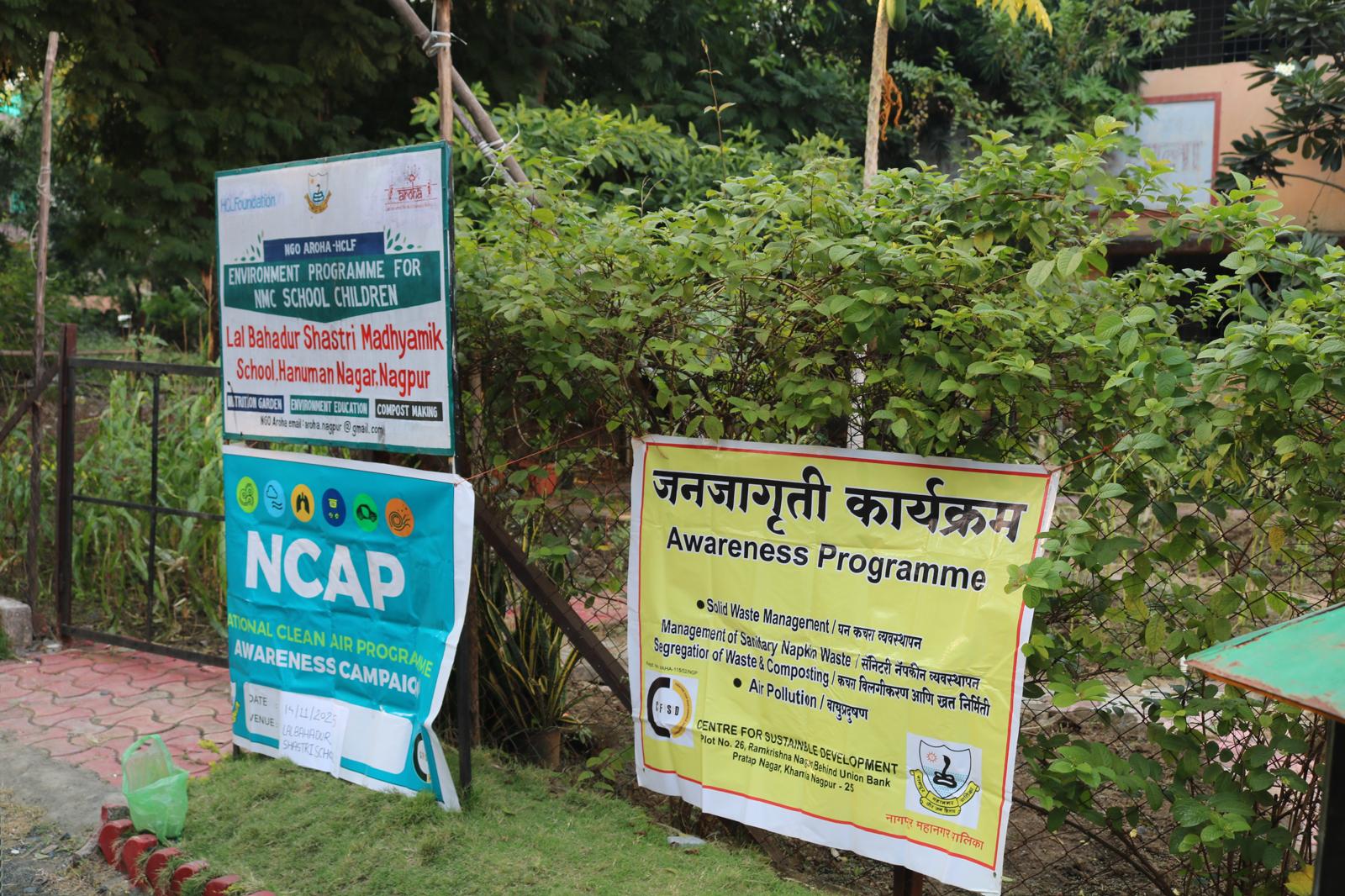
The awareness programs are organized in the city with the Nagpur Municipal Corporation under the National Clean Air Programme (NCAP) which was launched in 2019 by the Central Government of India.
From Classroom to Clean Air
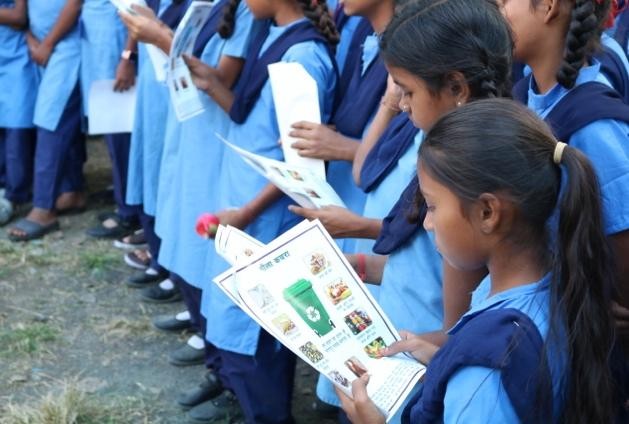
Although all these activities aim to promote environmental awareness, specific trainings and events are tailored to particular target groups, such as students. A school is more than a place of learning. It is a space where habits and values are shaped. When children grow up learning about composting practices at school, environmental awareness becomes part of their everyday thinking.
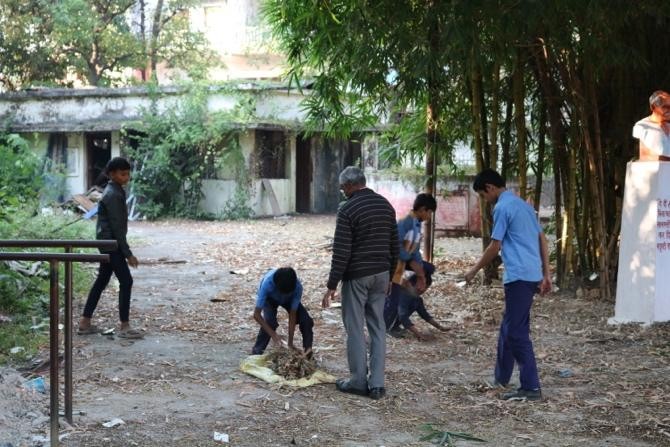
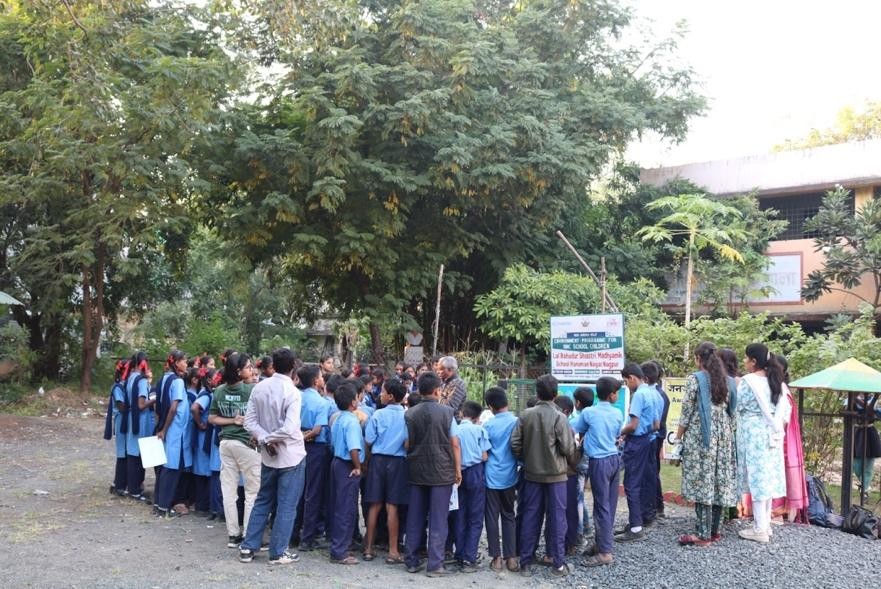
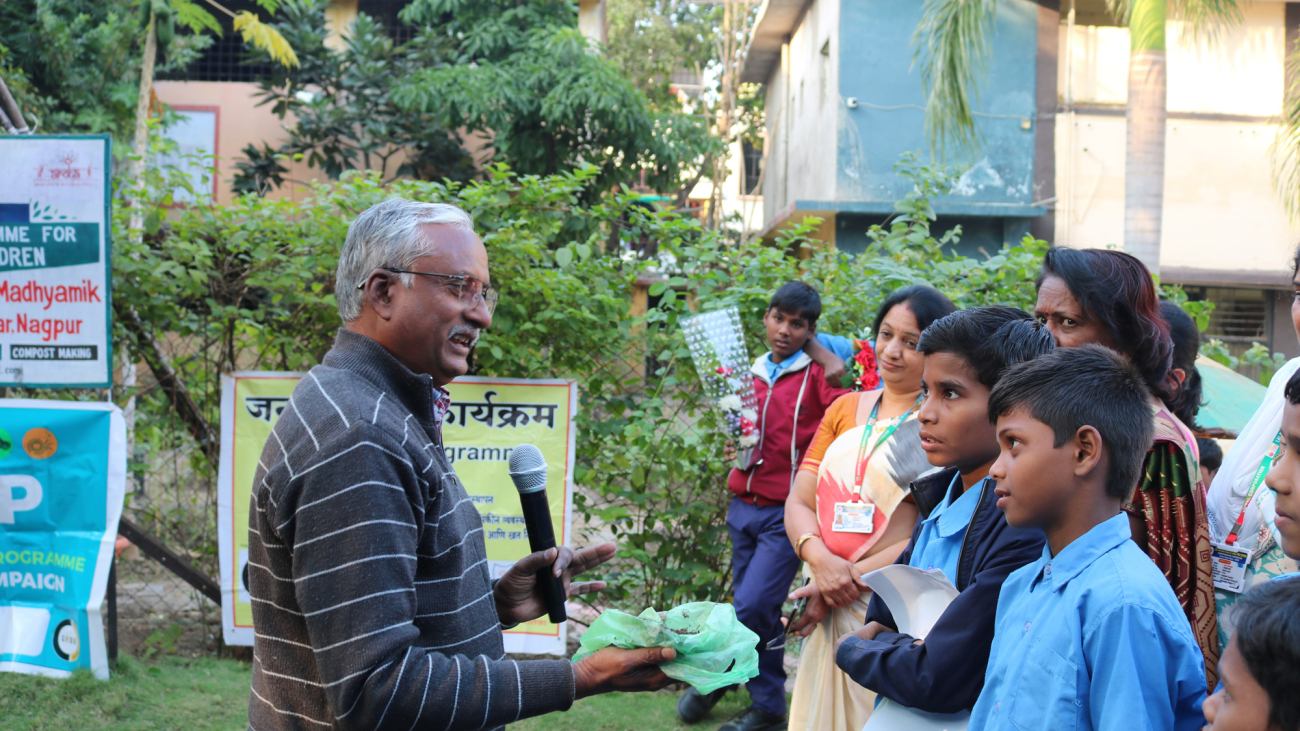
Earlier this month, CFSD conducted a Leaf Composting Training Program at the Lal Bahadur Shastri School in Nagpur. Mr. Laxmikant Padole, agronomist and composting expert, explained how dry leaves can transform into nutrient-rich compost. He introduced simple, hands-on techniques such as the pit method, basket method and vermi-composting. Students did not just listen but also got to practice what it means to collect, layer, and maintain leaves with microbial culture and sprinkle water for effective decomposition. The school turned into a living laboratory where children could gain practical knowledge of composting.
As the composting unit was set up on the campus, the school gave a commitment to monitor and maintain the compost pit regularly. To ensure this, CFSD staff will monitor it monthly. The goal is to then use the compost in school gardens and scale up efforts with further community involvement. Through this initiative, awareness was raised about reducing landfill waste and promoting circular practices.
While reducing air pollution needs to be a collective effort, everyone can play a meaningful role. Composting is one step into the right direction.